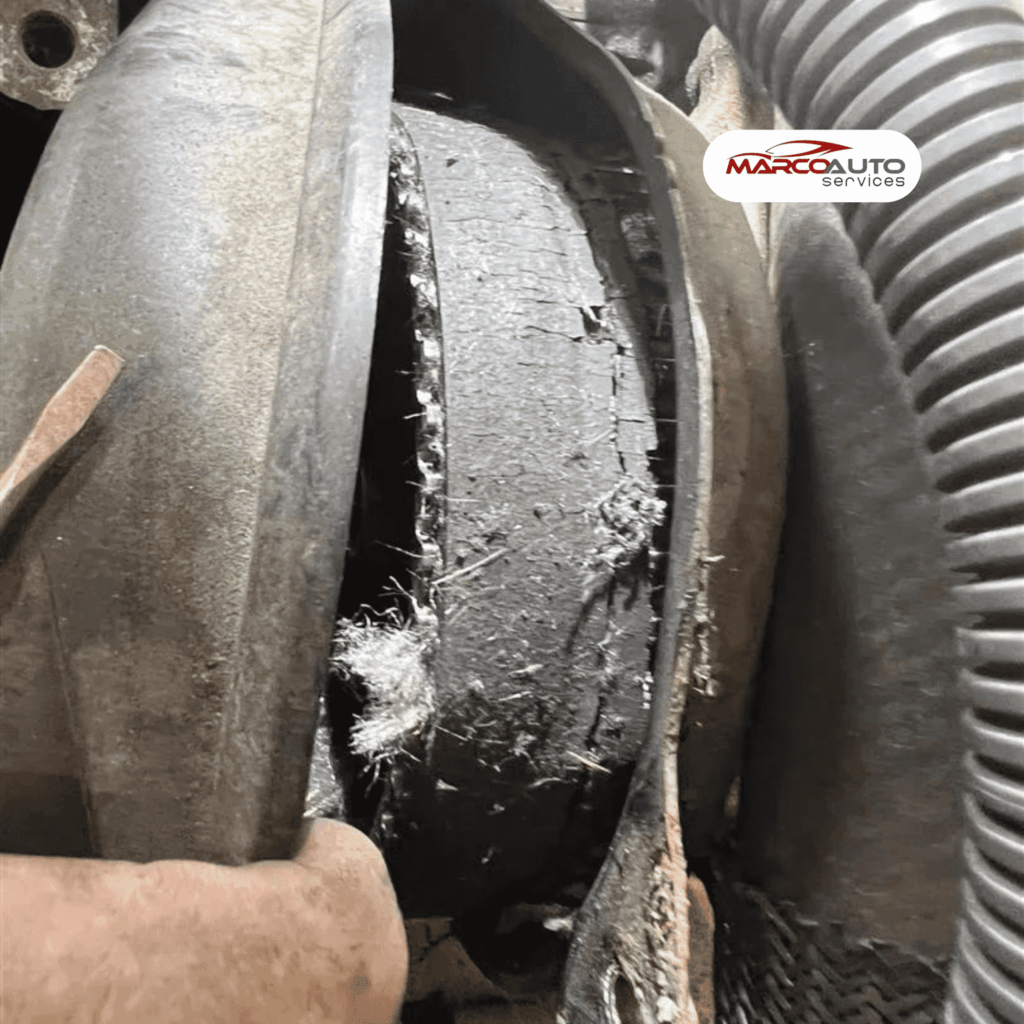
Weather conditions significantly affect vehicle performance, particularly on engine components like fan belts under constant tension and heat. Recognizing the impact of weather on fan belt lifespan enables car owners to foresee issues, minimize breakdowns, and make informed maintenance choices to avoid costly repairs.
Extreme Heat and Its Effect on Fan Belt
High temperatures are one of the most aggressive threats to Fan Belt Lifespan, particularly in hot climates where engines already run warm. Prolonged exposure to heat causes the rubber compounds in fan belts to dry out faster than intended. As the belt loses flexibility, it becomes brittle and more prone to cracking or snapping under load.
Heat also accelerates engine bay temperatures, increasing friction between the belt and pulleys. Over time, this friction leads to glazing, a smooth, shiny surface on the belt that reduces grip and efficiency. When this happens, the Fan Belt Life expectancy shortens significantly, even if the belt appears intact at first glance.
Cold Weather and Reduced Fan Belt
Cold weather affects Fan Belt Lifespan in a different but equally damaging way. In low temperatures, rubber contracts and stiffens, reducing elasticity. When you start your engine on a cold morning, the belt is suddenly forced to flex at high speed while still rigid, increasing stress on its internal fibers.
Repeated cold starts can weaken the belt structure over time, especially if the belt is already aging. This is why squealing noises are common in cold conditions, they often signal that Fan Belt Life expectancy is nearing its limit due to reduced flexibility and grip.
Humidity, Rain, and Fan Belt Lifespan
Moisture plays a quiet but destructive role in reducing Fan Belt Lifespan. In regions with high humidity or frequent rainfall, water can seep into the engine bay and interact with dirt, oil residue, and road grime. This combination creates abrasive conditions that slowly wear down the belt surface.
Excess moisture can also promote corrosion on pulleys and tensioners, causing uneven contact with the belt. Misaligned belts wear unevenly, reducing lifespan, regardless of the quality of materials used.
Dust, Dry Seasons, and Fan Belt Lifespan
Dry, dusty environments are often underestimated when considering Fan Belt Lifespan, yet they can be extremely harmful. Dust particles act like sandpaper, gradually eroding the belt as it rotates at high speed. Over time, this constant abrasion weakens the belt’s outer layer and exposes its internal cords.
In dry seasons, dust can also clog pulley grooves, reducing proper belt seating. This leads to slippage, increased heat, and accelerated wear. As a result, Fan Belt Life expectancy decreases gradually through unnoticed degradation; regular inspections are essential.
Seasonal Changes and Fluctuating Fan Belt Lifespan
Rapid seasonal transitions place unique stress on Fan Belt Lifespan because the belt must repeatedly adapt to changing temperatures and humidity levels. Expansion in heat and contraction in cold create a cycle of tension changes that strain the belt material over time.
This constant adjustment can weaken the belt’s internal structure, especially if the tension is not properly set. Modern maintenance increasingly relies on predictive tools, raising an important question: Can AI-driven vehicle diagnostics accurately predict changes in Fan Belt Life expectancy before visible damage occurs? As technology-based monitoring becomes more common, early detection of weather-related wear may soon become the norm.
Practical Maintenance Tips to Protect Fan Belt
Protecting Fan Belt Lifespan starts with awareness and routine care. Regular inspections help identify cracks, glazing, or fraying before complete failure occurs. Keeping the engine bay clean reduces the impact of dust and moisture, while proper belt tension ensures even wear across all seasons.
Using manufacturer-recommended belts designed for your climate can also extend Fan Belt Life expectancy. Advances in material science are producing belts that tolerate wider temperature ranges, offering better durability in extreme conditions.
Conclusion
Weather significantly impacts Fan Belt Lifespan, with heat, cold, humidity, and dust contributing to wear. Understanding these effects enables proactive maintenance to prevent breakdowns and extend component life. For inspections, replacements, and tailored advice, clients are encouraged to contact Marco Autos for optimal vehicle performance throughout the year.
Recent Comments