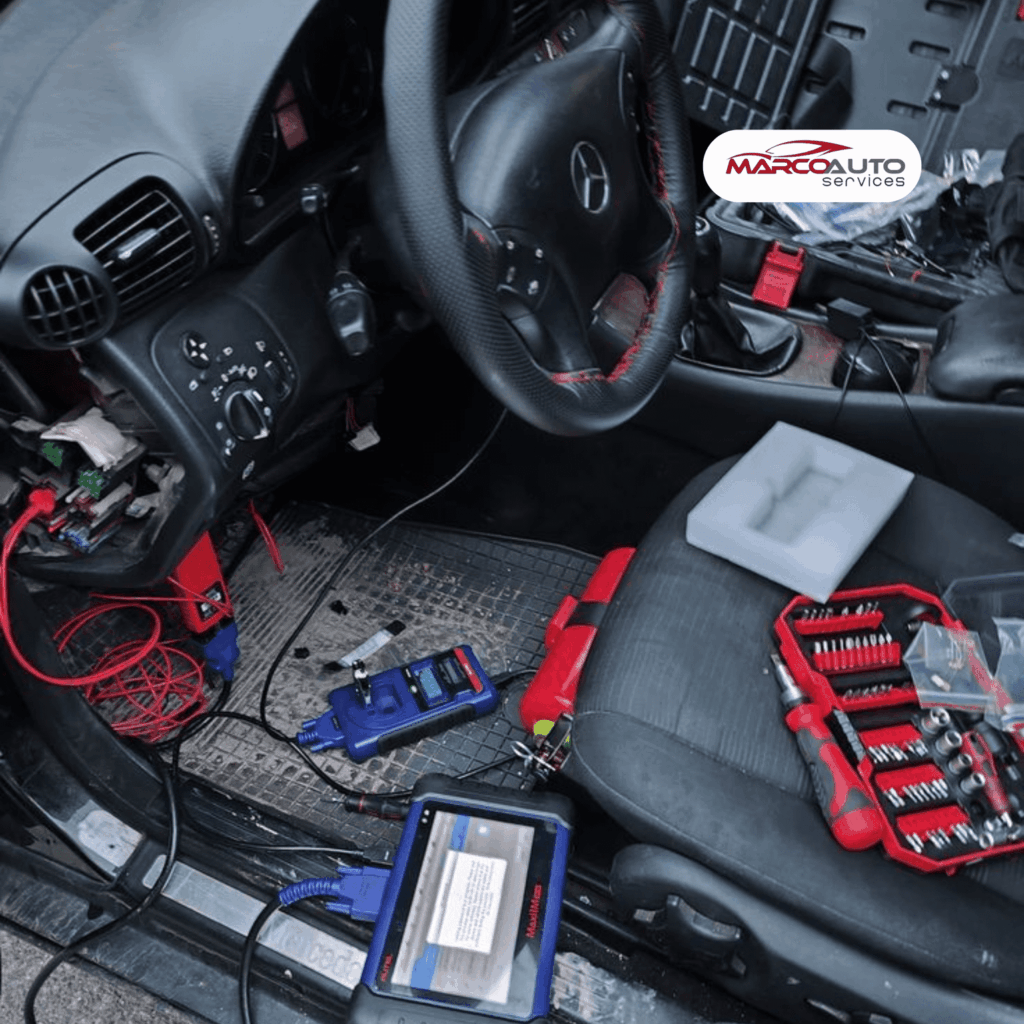
Electrical faults are among the most common challenges drivers face, and repairing minor electrical issues early can save you from bigger, more expensive problems down the road. Modern vehicles depend highly on electronics, from lighting systems to onboard computers; thus, understanding how these systems work makes fixing minor electrical issues much easier. With today’s advancements, even AI-driven diagnostics play a role in car maintenance, which begs the question: Can AI eventually help everyone fix minor electrical issues more accurately than traditional ways of doing it?
Understanding Your Vehicle’s Electrical System
The first step to fixing minor electrical issues is understanding the basic components that make your car’s electrical system function: the battery, alternator, starter, fuses, and wiring harnesses come together to power every electrical feature. When you start fixing little electrical issues, knowing where these components are helps you troubleshoot faster. In many cases, modern vehicles have AI-assisted monitoring systems, which make diagnosis and fixing of minor electrical faults much easier both for car owners and technicians.
Identifying Common Symptoms of Electrical Faults
Pay attention to early warning signs before fixing minor electrical issues. These might include dim headlights, intermittent dashboard lights, malfunctioning power windows, or an engine that refuses to start. Matching symptoms with likely causes helps you avoid unnecessary repairs when fixing little electrical issues. Real-time suggestions for fixing little electrical issues offered even by AI-powered apps are very helpful as the second opinion during troubleshooting.
Inspect the Battery and Terminals
By far, one of the easier steps in fixing minor electrical issues is to check your battery. A weak or corroded battery can be responsible for a number of electrical malfunctions. In fixing minor electrical issues related to battery performance, you will want to check for corrosion on the terminals, ensure they are tightly connected, and test the voltage with a multimeter. Because modern cars sometimes rely on AI-integrated battery monitoring systems, they can warn you of low charge or irregular performance and, therefore, make fixing electrical issues much quicker and more precise.
Checking Fuses and Relays
Fuses serve to protect your car’s electrical circuits, so blown fuses are often the cause of repair when fixing smaller electrical issues, like dead lights or malfunctioning accessories. When making repairs for minor electrical concerns, refer to the fuse box diagram in your owner’s manual always. Replace blown fuses with the proper amperage to prevent further damage. Relays play a crucial role in circuit functionality, and troubleshooting them is essential for resolving erratic issues. Advanced vehicle AI will soon provide automatic alerts, directing drivers to the responsible fuse for efficient repairs.
Checking Wiring and Connectors
Minor electrical issues can arise from loose or damaged wiring, necessitating inspection of visible wires. If frayed wires are apparent, or the connectors seem loose, correction is a key step in order not to allow minor issues to develop into serious ones. In new cars, AI-based diagnostics can sometimes point to wiring inconsistencies, which make the effort of fixing electrical issues far less time-consuming compared to before.
Testing the Alternator
The alternator keeps your battery charged while the engine is running. When it fails, fixing electrical issues becomes an urgent matter to prevent a complete breakdown. During the process of fixing small electrical issues of the charging system, you may find signs such as dimming lights when the accelerator is pressed or a low battery light on your dashboard. You can determine whether the alternator is producing adequate power by using a voltmeter. Most of the new vehicles have AI-based sensors, and hence they provide early warnings when the performance of the alternator goes down, thus accelerating the process of fixing minor electrical issues.
Inspecting Your Vehicle’s Ground Connections
Ground wires are very important for steady electricity flow. Poor grounding results in flickering lights and malfunctioning gauges, among other faults necessitating fixing of minor electrical issues. To start fixing minor electrical issues brought about by poor grounding, find major straps that ground in the engine bay and clean them, ensuring they are tight. Most state-of-the-art AI systems installed in modern-day cars can easily detect voltage anomalies, hence enabling one to fix minor electrical issues linked to poor grounds even faster.
Addressing Issues in the Lighting System
Light-related faults are among the most common reasons for fixing minor electrical issues. Whether it’s headlights, turn signals, or brake lights, simple steps such as changing bulbs, checking sockets, and verifying switch operation can help when it comes to fixing minor electrical issues. LED-equipped cars may have onboard AI that monitors failing lights. Such technology makes fixing minor electrical issues easier, where possible, by notifying a driver before the light totally goes out.
Using Diagnostic Tools and AI Assistance
Today’s diagnostic scanners, including AI-enhanced tools, make repairing minor electrical problems less complex by rapidly determining trouble codes. When repairing minor electrical problems, an OBD-II scanner assists in knowing what specific electrical systems need your attention. AI-driven diagnostics may investigate patterns and suggest the most probable solution; thus, drivers will have an advantage in repairing minor electrical problems in an advanced manner without resorting to guesswork.
When to Seek Professional Help
While many steps in fixing minor electrical issues can be handled by the driver, some problems require expert knowledge. If you have attempted fixing little electrical issues and symptoms persist, do consult a qualified technician. Professionals have advanced equipment, wiring diagrams, and AI-guided diagnostic tools that make fixing little electrical issues more accurate and safer. This ensures that problems are resolved without any risk of damage to your vehicle.
Conclusion
Understanding the electrical system in a car, watching out for warning signs, and utilizing today’s diagnostic tools with AI go a long way in making minor electrical issues easy to fix for drivers. However, some problems require the expertise of seasoned professionals. For reliable, efficient, and expert support in fixing minor electrical issues, clients should reach out to Marco Autos for top-quality automotive electrical care.
Recent Comments