Is Your Car Safe to Drive? How Regular Brake Service Could Save Your Life

Regular Brake Service

Brake panic is every driver’s worst-case scenario nightmare. Cars today are machines of wonder, but the utmost importance of a well-maintained braking system never wavers. Not only is it a safety hazard to forget your brakes, but it’s a gamble with your own life and others’ lives. Regular Brake Service is the mark of responsible car ownership and an investment in safety before trouble occurs.

The Silent Erosion of Stopping Power: Understanding Brake Degradation

Brakes never simply “fail” – they simply gradually deteriorate. Friction, heat, and the elements all contribute to wearing down their functionality. Brake pads wear down, rotors become warped, brake lines rust, and brake fluid becomes contaminated. This deterioration takes place incrementally, so it goes unnoticed to drivers until it is too late. Regular Brake Service prefers to approach these issues before they become dangerous.

Brake Pads: More Than Just Friction Material

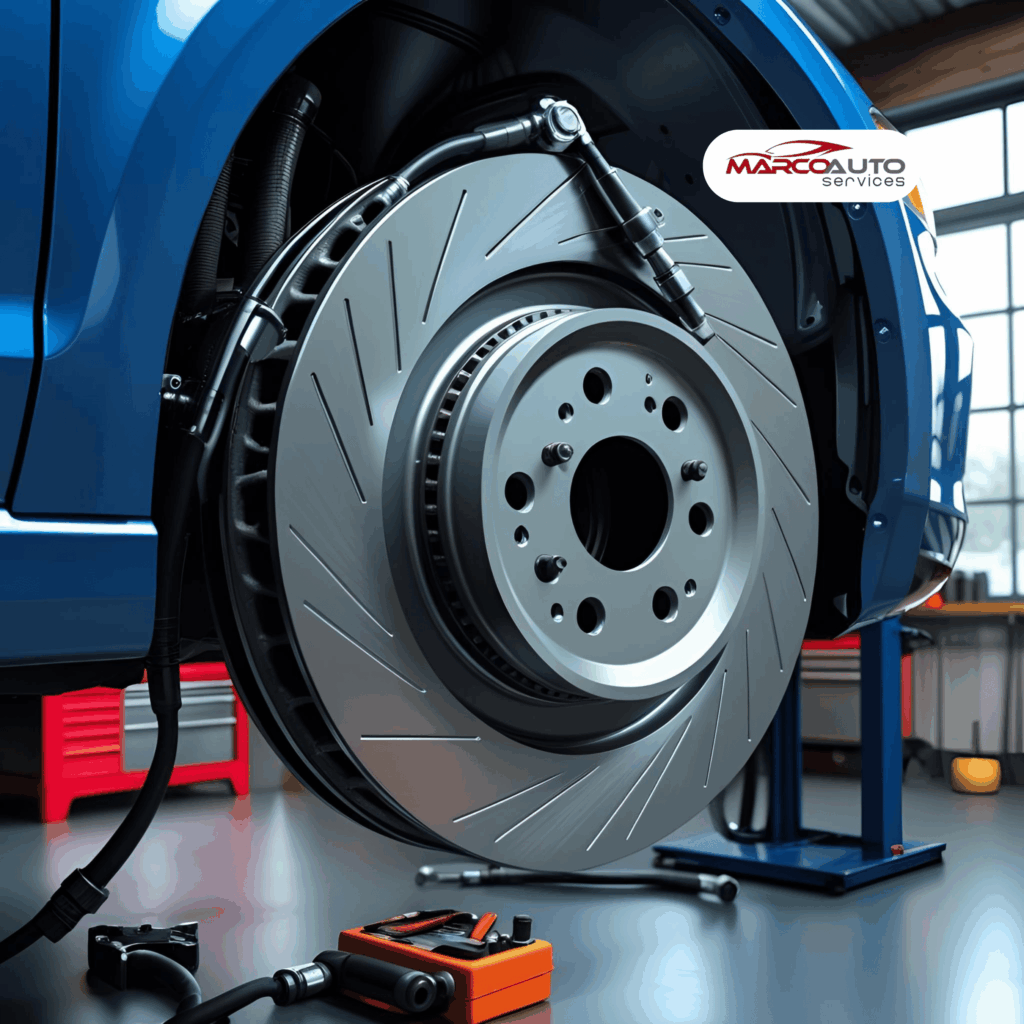
Brake pads are the surface most accountable for creating friction necessary to stop your vehicle. Over time, the friction material wears thin and becomes less effective. Thinning brake pads equate to longer stopping distance. Thin pads also have the potential to destroy rotors, and that means higher repair costs. Regular Brake Service includes brake pad thickness checks and replacement as necessary, ensuring maximum stopping power.

Rotors: The Secret to Safe Braking

Rotors, the shiny discs that the brake pads clamp down on, are a critical heat-dissipating part of braking. Continuous friction and heat can curve, crack, or create uneven surfaces on rotors. Faulty rotors can induce vibrations, clunking, and poor braking. Regular Brake Service includes rotor inspection for wear and resurfacing or replacement for smooth, consistent stops.

Brake Fluid: The Unsung Hero of Hydraulic Braking Systems

Brake fluid is the vehicle’s braking system’s hydraulic lifeblood. It transmits the pressure from your foot on the brake pedal to the brake calipers. Brake fluid is hygroscopic, i.e., it absorbs water from the air. Excess moisture contaminates the fluid, lowering its boiling point and potentially causing brake fade – a dangerous situation where the brakes lose their response following repeated use. Regular Brake Service involves brake fluid moisture content checks and flushing and replacing it as required in order to provide maximum hydraulic pressure and prevent brake fade.

Brake Lines: Avoiding Catastrophic Failure

Brake lines are the pipes which carry brake fluid to the wheels. Brake lines become corroded with age and may leak or lose pressure. A ruptured brake line results in a sudden, complete loss of braking power – any driver’s worst nightmare. Regular Brake Service includes inspection of brake lines for corrosion, leaks, and damage to ensure their integrity and prevent catastrophic brake failure.

The ABS and Other Advanced System Role: Is AI Capable of Enhancing Brake Maintenance?

Modern vehicles are equipped with advanced braking systems including Anti-lock Braking System (ABS), Electronic Stability Control (ESC), and Traction Control System (TCS). The systems incorporate sensors and sophisticated algorithms to enhance braking power and stability. While the technologies offer significant safety advantages, they also help to complicate the braking system. We ask ourselves, Will diagnostics powered by AI become the standard, predicting brake component failure before it occurs and dynamically adjusting maintenance cycles based on real-time data analysis? Incorporating AI into Regular Brake Service has the potential to revolutionize preventive maintenance and make our roads safer still.

The Cost of Neglect: Paying Now or Paying with Your Life

The cost of Regular Brake Service is small in comparison to the potential consequences of a brake failure. Forgetting your brakes can lead to accidents, injuries, and even fatalities. In addition, prolonged neglect could lead to more expensive and complicated repairs down the road. It is a safety investment in yourself, your vehicle’s longevity, and your own stress relief to invest in Regular Brake Service.

Conclusion: Prioritize Your Safety – Call Marco Autos Today!

Don’t wait any longer. Keep your car’s braking system in top condition with Regular Brake Service at Marco Autos. We employ skilled mechanics to perform detailed brake examinations, repairs, and servicing to help keep you and the ones you love safe on the road. Call Marco Autos today to schedule your Regular Brake Service appointment and have the comfort of knowing that your brakes are in top working order. Drive safely, and entrust your braking worries to Marco Autos!
Read more

Check Engine Light On? What Your Car Is Trying to Tell You.

Engine Lights

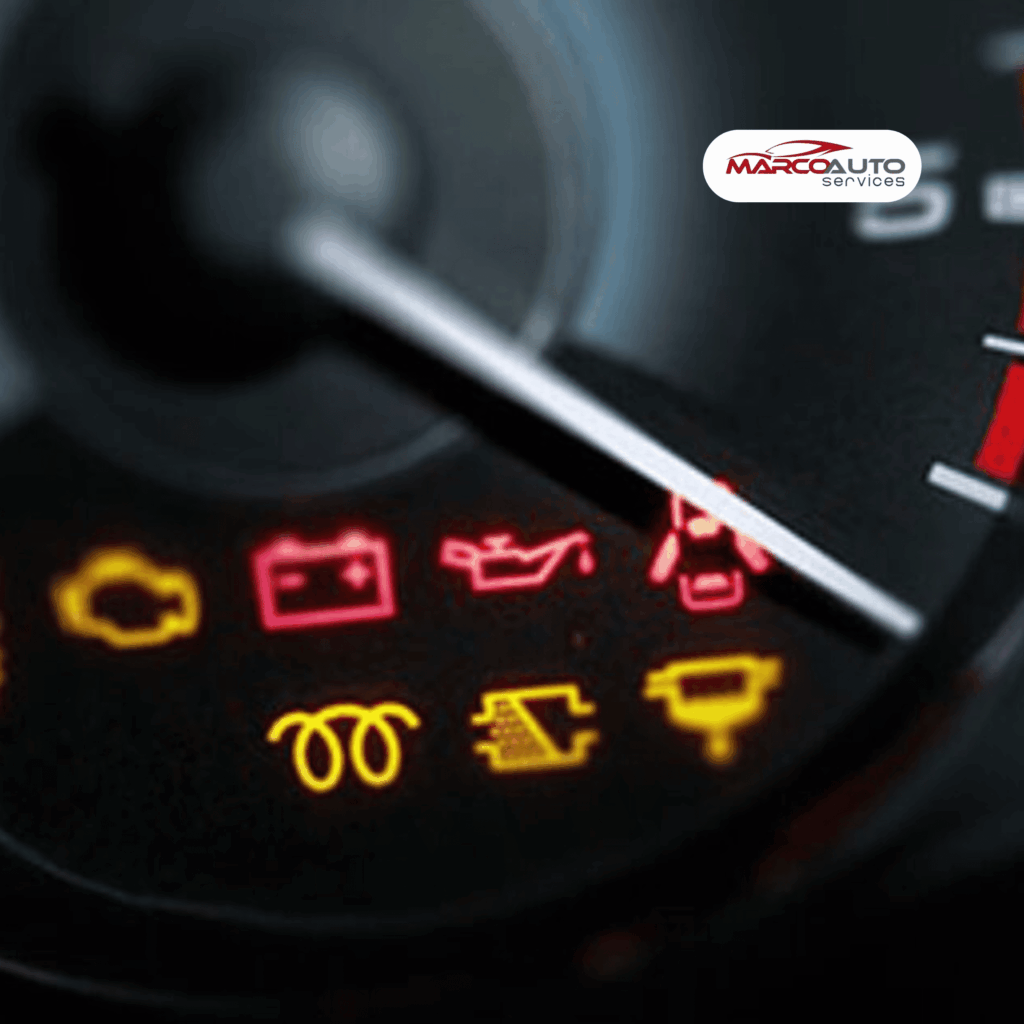
The sudden appearance of the Check Engine Light on your car’s dashboard is rarely a welcome surprise. A small warning light can indicate simple issues or serious mechanical problems. Understanding these engine lights helps address problems and keeps your car reliable.

Deciphering the Language of Engine Lights

Modern vehicles equip sophisticated onboard diagnostic (OBD) systems that monitor the function of numerous components and systems. When the system detects a fault, it will record a diagnostic trouble code (DTC) and illuminate the Engine Lights. The scan tool provides access to the codes, which offer useful clues about the nature and location of the fault. However, an experienced individual with proper equipment must interpret the codes and accurately diagnose the root cause.

Common Culprits Behind Illuminated Engine Lights

While the specific reason for an illuminated Engine Lights can vary widely, some problems occur more frequently than others:

Loose or Damaged Gas Cap: Incredibly enough, a loose or damaged gas cap is one of the most common reasons for the Engine Lights to turn on. The gas cap creates a seal within the fuel system, and a leak can make the system recognize a fuel vapor leak.

Catalytic Converter Issues: The catalytic converter reduces harmful emissions. When it fails, it can cause the Engine Lights to illuminate. Vehicles must be replaced or fixed to meet environmental standards and vehicle performance.

Oxygen Sensor Failure: Oxygen ([O2] sensors) are tasked with monitoring the oxygen levels of the exhaust gas, which helps the engine control unit (ECU) optimize the air-fuel mixture. A faulty O2 sensor can lead to reduced fuel efficiency, poor engine performance, and Malfunction Indicator Lamp illumination.

Spark Plug or Ignition Coil Problems: Faulty spark plugs or ignition coils can cause misfires, rough operation, power loss, and catalytic converter damage. These issues will trigger the Malfunction Indicator Lamp.

Mass Airflow Sensor (MAF) Failure: The MAF sensor tracks the amount of air entering the engine, providing essential data for fuel delivery calculations. A failed MAF sensor can disrupt the air-fuel equilibrium, causing poor performance and lit Engine Lights.

The Need for Professional Diagnosis

While it may be tempting to ignore the Malfunction Indicator Lamp or attempt a DIY fix, you must get it diagnosed professionally. While reading Malfunction Indicator Lamp codes is an excellent initial step, an expert typically needs to conduct further diagnosis. A professional mechanic diagnoses the cause of the problem appropriately, carries out any repairs or replacements as required, and ensures that the issue is resolved correctly to prevent further damage. Attempting to fix it yourself without proper knowledge and tools can lead to a more profound issue.

The Risks of Ignoring Engine Lights

Disregarding the Engine Lights has serious consequences. What might start as a minor issue can quickly escalate into a major mechanical failure, leading to costly repairs and even safety issues. For instance, a misfire caused by worn-out spark plugs will damage the catalytic converter, which is extremely expensive. Delaying repairs will also negatively impact gas mileage, emissions, and your car’s overall longevity. It’s never a good idea to disregard Malfunction Indicator Lamp.

Preventative Maintenance to Keep Engine Lights Off

The best method to minimize the likelihood of Engine Lights incidents is through routine preventative maintenance. This includes following the suggested maintenance schedule from the manufacturer, checking and replacing fluids, replacing worn-out spark plugs, checking belts and hoses, and ensuring that the fuel system is clean. Proactive vehicle maintenance can identify and repair potential problems prior to them triggering the malfunction Indicator Lamp .

Advanced Diagnostic Techniques for Complex Engine Lights Issues

Some Engine Lights cases are, indeed, more complex than others. For instance, intermittent problems, wiring faults, and electronic control module (ECM) problems can, consequently, be challenging to diagnose. Therefore, technicians may require advanced diagnostic techniques, such as oscilloscopes, multimeters, and specialty scan tools, in order to determine the underlying cause. Ultimately, experienced technicians, who are better trained and more experienced, are, thus, better equipped to handle these complex cases of malfunction Indicator Lamp.

The Role of Software Updates in Resolving Engine Lights Problems

Updating the vehicle’s ECM software can resolve engine light issues in some cases. The software updates can resolve software glitches, improve engine performance, and align the function of the systems. A mechanic checks and updates software for Engine Lights.

The Use of Quality Parts in Resolving Engine Lights Issues

Use high-quality replacement parts to resolve Malfunction Indicator Lamp issues when you need to make repairs. Lower quality parts can fail again sooner rather than later, causing duplicate issues and more expense down the road. A quality mechanic will install parts that are at or above the manufacturer’s specifications, providing long-lasting repairs.

Don’t Overlook Your Vehicle’s Warning Signal! Call Marco Autos Today!

When your Malfunction Indicator Lamp appear, don’t hesitate. Contact the experts at Marco Autos for professional diagnosis and repair. Our skilled technicians have the training, knowledge, and equipment to diagnose and repair any Engine Lights issue, large or small. We provide high-quality service and parts for safety. Trust Marco Autos to keep your vehicle in good running condition!

Read more
Recent Comments
    Get a quote

    An duo lorem altera gloriatur. No imperdiet adver sarium pro. No sit sumo lorem. Mei ea eius elitr consequ unturimperdiet.

    Get Quote

    Archives